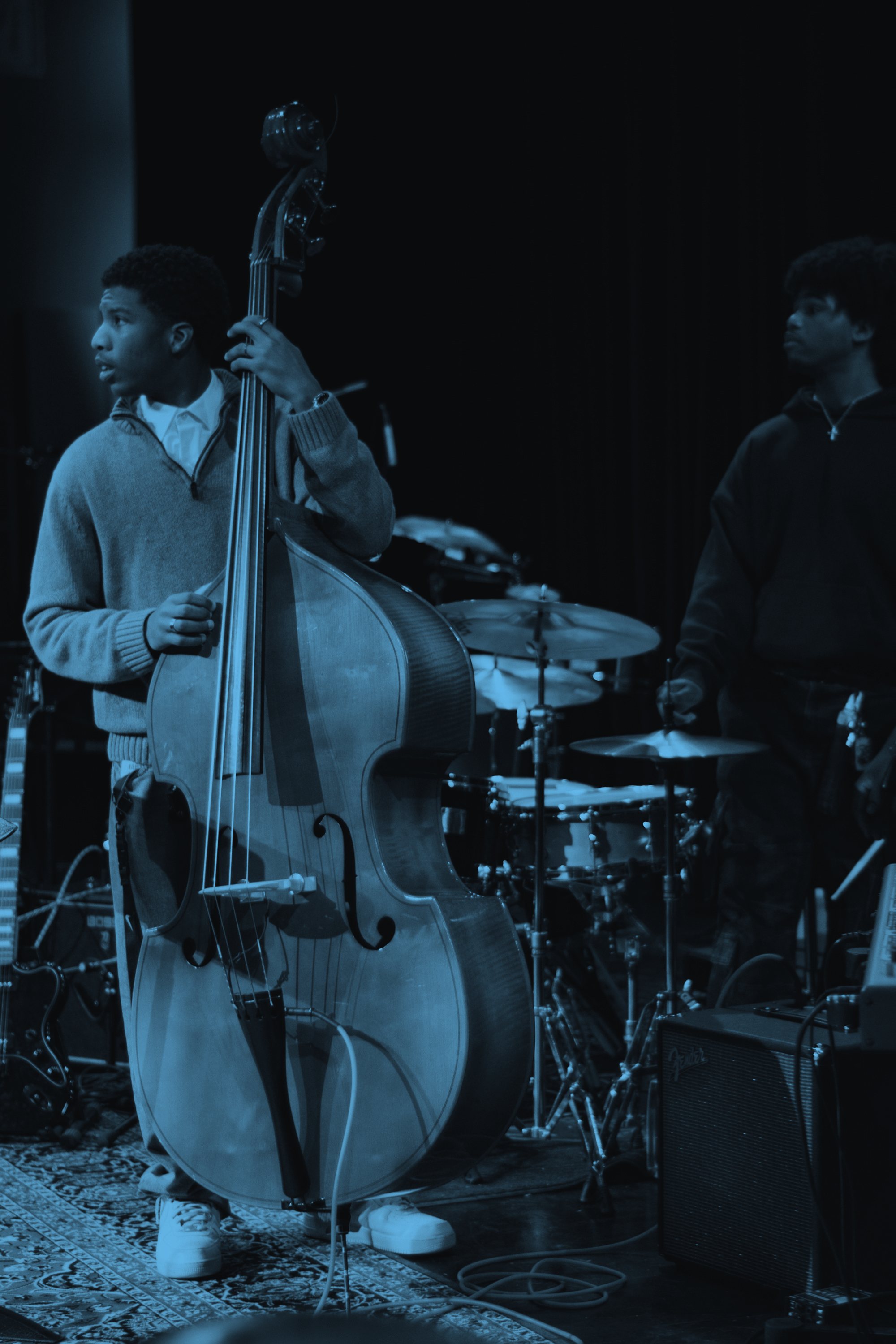
Daniel Fox.
I'm a working Denver musician, bass is my main instrument, and I teach what I actually play.
The teaching comes out of the playing.
Bass is my main instrument, electric and upright, and I think like a bass player no matter what I'm holding, which means I play the root and the structure first so everyone else has something to stand on. Around the bass I play guitar, drums, and piano, and I track and produce music in Logic.
Right now I play in a flamenco band that works regularly at Monarch Casino in Black Hawk, and in jazz duos, trios and quartets, depending on how we're getting booked. Along the way it's been pop punk, Americana, funk, 90s-inspired jazz fusion, grunge, singer-songwriter projects, and jazz pop.
A lot of my education happened as the hired gun. Bands are fun, but the material is often simpler and narrower than what you're asked to do when you sit in with a band whose style you don't know. I've shown up and played full gigs with bands I'd never met, because their bassist had babysitting duty. I learned more on those nights than almost anywhere else, and what I learned there is what I teach.
Two teachers trusted me with their students.
Fox Lessons started when Jordan Lovinger and Gavi Torres handed me their students. They're both great players. Jordan is a multi-instrumentalist, and Gavi is one of the best jazz fusion guitar players in town. Both trusted me to teach their students. Every lesson has to be worth that trust.
My training.
I played in jazz band in high school and college, took private lessons on guitar, taught myself bass and drums, and had piano training as a young child that I'm told happened. I have no conservatory degree, and I won't pretend otherwise.
Most of my actual skill comes from learning to listen and then play what I hear. That's what I teach: how to listen, so you can skip the steps you don't need while you learn the music you love.
Students get me as a coach as much as a teacher. We find what you actually care about, we point the lessons at it, and my feedback follows your goal, light if you're in it for fun and direct if you're chasing a deadline.
If you're coming back to music after years away, so did I. The adults page has that story in full.
We were made for this.
There's something that music does to somebody's brain, to their heart, to their physiology as they play it. There's a beauty in learning to make tones and sounds and express yourself in the language of song. It's a beauty that, for many, is more important than money or love or material wealth. It's something that we're born into this life wanting to get out of us, wanting to say. There's no other way to say it. It's only the tones and the notes and the phrases and the songs that we were put here to express. Whether that's soloing over a Miles Davis song or playing Sum 41 or Nirvana or writing our own music and singing it. We were made for this. We know that if we don't say it, a part of us is going to stay dormant, maybe not die, but we're not going to have the fulfillment and find the spark, the art, and the beauty of life that we would if we really embrace this.
If some part of that is you, come play.